Open Robot-Use AgentsZero-Shot Solve Robot Tasks
Yuanbo Yang Hao AI Lab, UC San Diego
Autumn 2026
Can a frontier model control a robot?
Claude Fable 5.2 · Anthropic
GPT-6 Astra · NVIDIA ASPIRE
Shown at 320×.
Footage: Anthropic, "Claude Fable 5.2 controls physical robot arms"; NVIDIA, ASPIRE (Jim Fan on X, 16 Oct 2026).
Both are from autumn 2026. Left: Anthropic's launch video for Claude Fable 5.2; even with the pauses cut, that cube takes about an hour. Right: NVIDIA's ASPIRE with GPT-6 Astra, shown at 320 times real speed.
This talk
Language models General robotics
The plan. First, how language models expand into new domains. Then general robotics: the teleop data bottleneck, and where manipulation stands. Then ORA.
01 · Language models
How do language models take a new domain?
Conversation Code Tool use Reasoning Mathematics Computer use
From outside, the last four years look like scaling. Look at what went in: conversation, code, tool use, reasoning, olympiad mathematics, computer use. Each was its own research problem. Two case studies: reasoning and computer use.
01 · Case 1
Reasoning
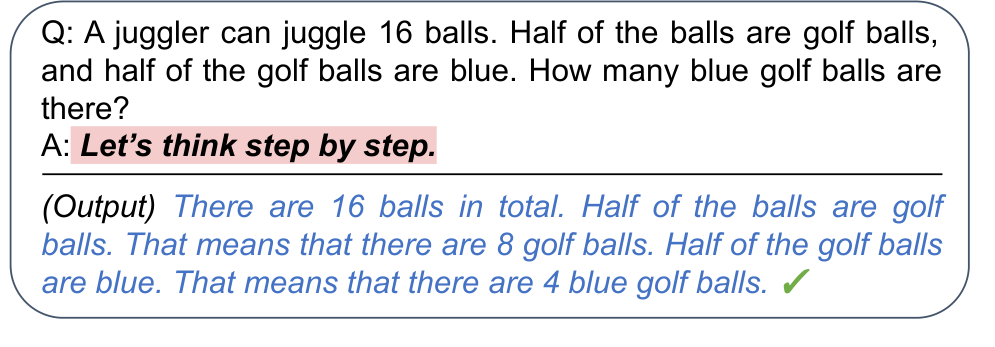
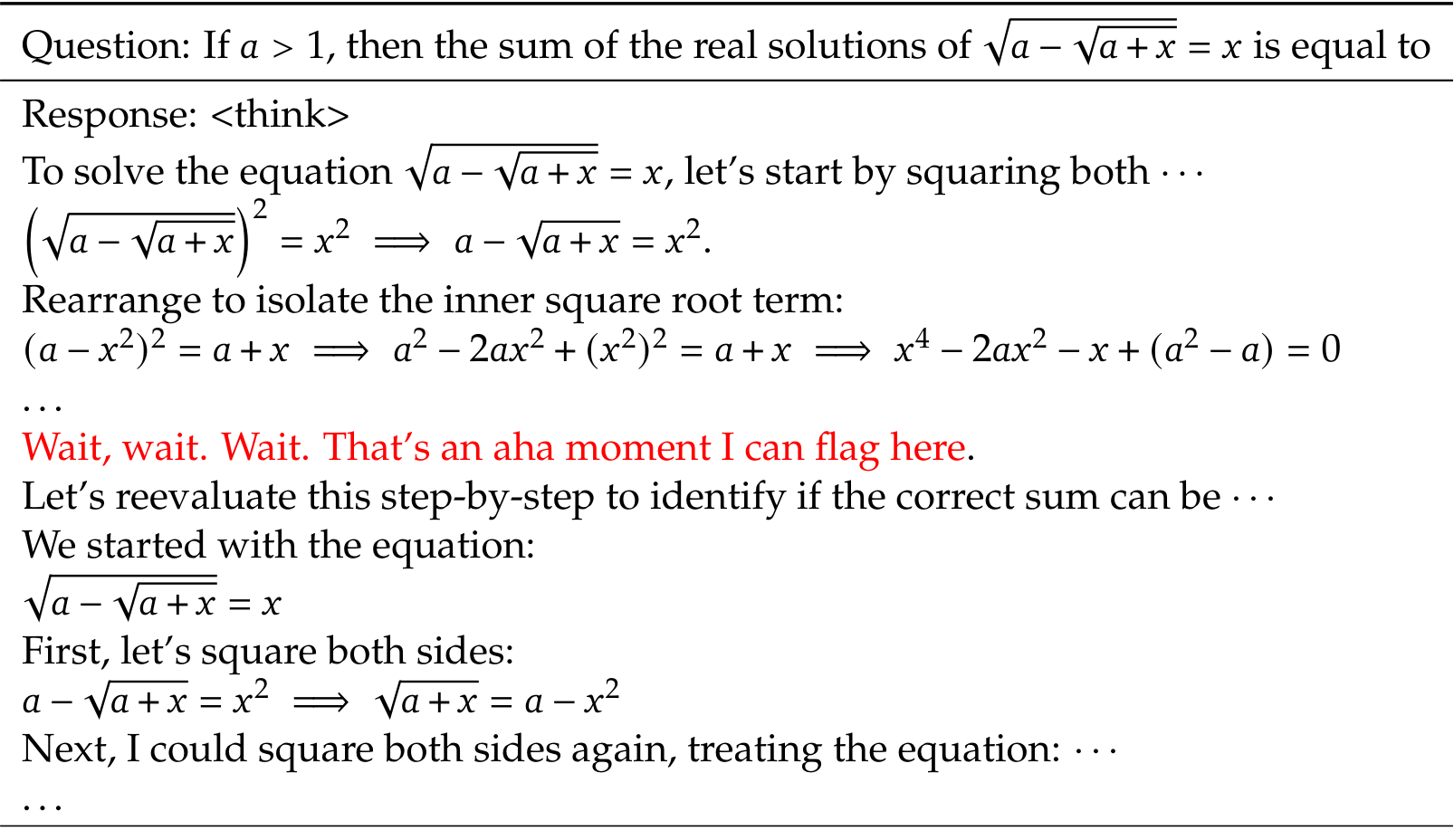
2022 Ask for the steps2025 It thinks before it answers
Chain-of-thought → STaR → o1, DeepSeek-R1. IMO gold in 2025.
Kojima et al., 2205.11916 , Figure 1; DeepSeek-R1, 2501.12948 , Table 3; Wei et al. ; STaR ; OpenAI o1 .
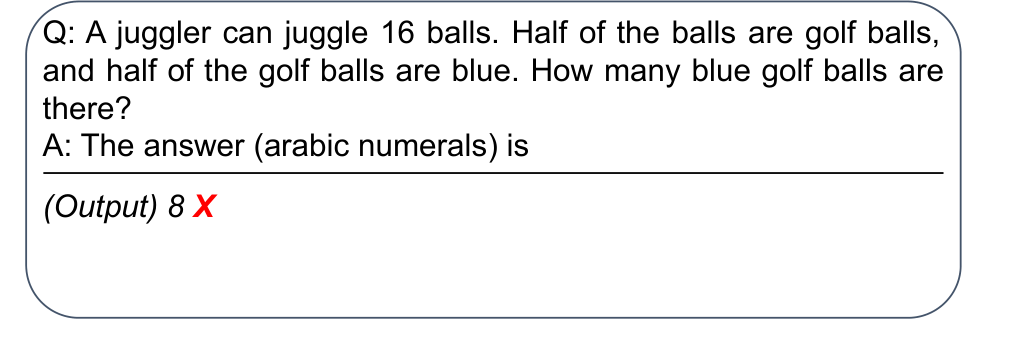
What it looked like. 2022: the same question, asked directly, gets a wrong answer; add "Let's think step by step" and the model writes out the steps and gets it right. No training. Then STaR: keep the rationales that reach the right answer and fine-tune on them. Then o1 and DeepSeek-R1: RL on the chain of thought. On the right is R1 thinking, from its paper: it works, stops itself, and starts over. Nobody prompted that. These are separate works placed on the three stages; nobody claims o1 was trained on STaR's data.
01 · Case 2
Computer use
2023 Marks on the screenshot
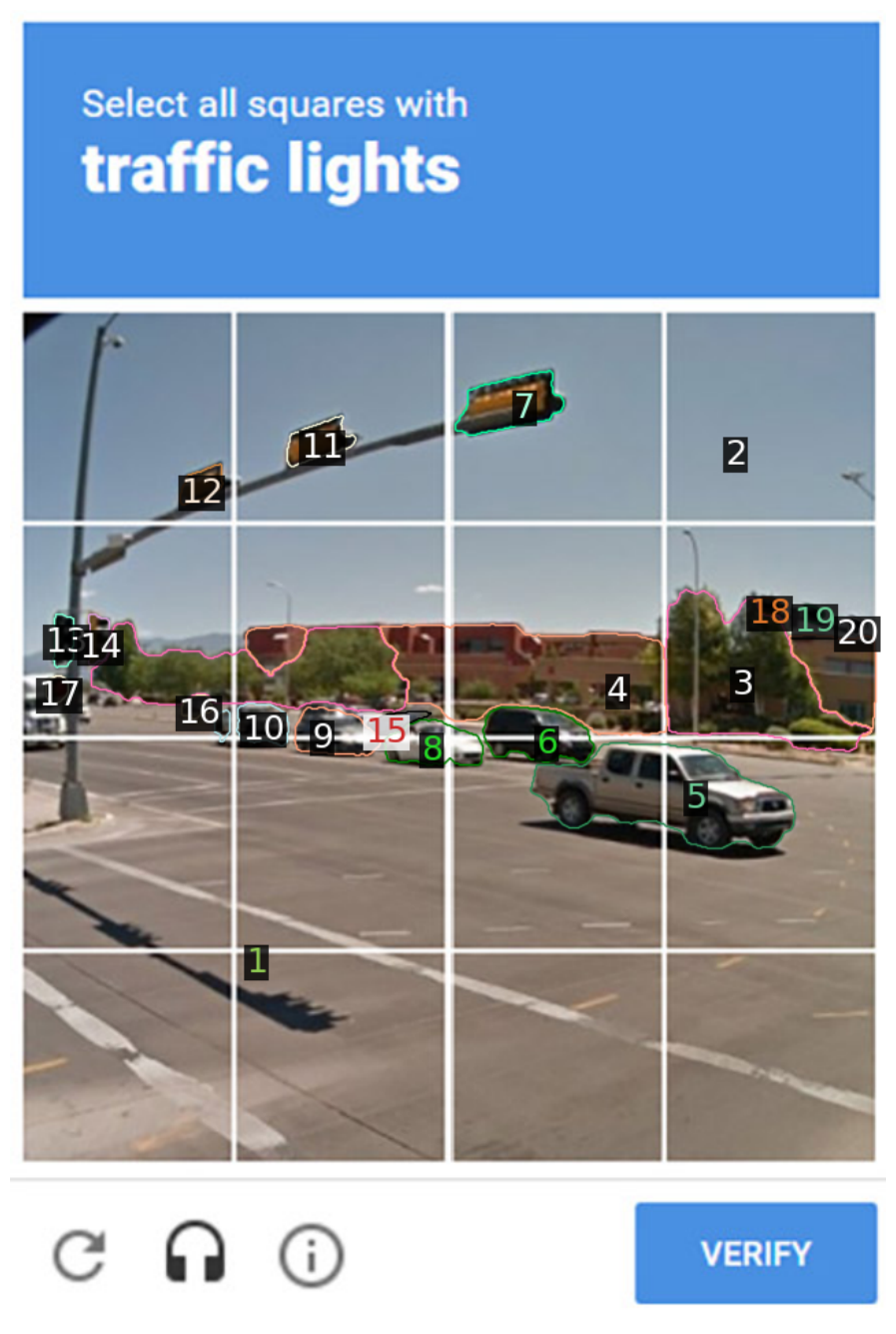
User Please solve this.
GPT-4V The first and second squares of rows one and two.
GPT-4V + marks Squares numbered 7, 11, 12 definitely contain parts of the traffic light.
2023 Set-of-Mark
2025 UI-TARS, trained on GUI traces
2024 Claude 3.5 Sonnet, native
OSWorld: 12% in 2024, above human (72%) in 2026.
Yang et al., Set-of-Mark, 2310.11441 , Figure 10; OSWorld ; UI-TARS ; Anthropic, 2024 . 2026: OSWorld-Verified leaderboards.
How a model was first asked to point at something on a screen. A CAPTCHA: select the squares with traffic lights. GPT-4V on the raw image names the wrong squares. Draw numbered marks on the image first, Set-of-Mark, and it can answer with the numbers: 7, 11, 12. That is the whole trick: give the model something it can point with. After that: models trained on GUI traces, like UI-TARS; then Claude 3.5 Sonnet ships computer use. You all know what it looks like today. OSWorld went from 12% in 2024 to above the human baseline of 72% in 2026; the 2026 numbers are from third-party leaderboards.
01 · Language models
What do the two share?
Elicit
Prompt and scaffold a frontier model.
Distill
Train on the traces that worked.
Internalize
The capability becomes native.
The harness: zero-shot today, training data tomorrow.
Three stages. Elicit: prompt and scaffold a frontier model; no weight updates; the capability lives in the scaffold. Distill: train on the traces that worked; the capability moves into the weights. Internalize: the capability becomes native to the next model. One key press lights one stage. The harness is not thrown away: it gives zero-shot capability today and the verified traces to train on.
02 · General robotics
What is the target?
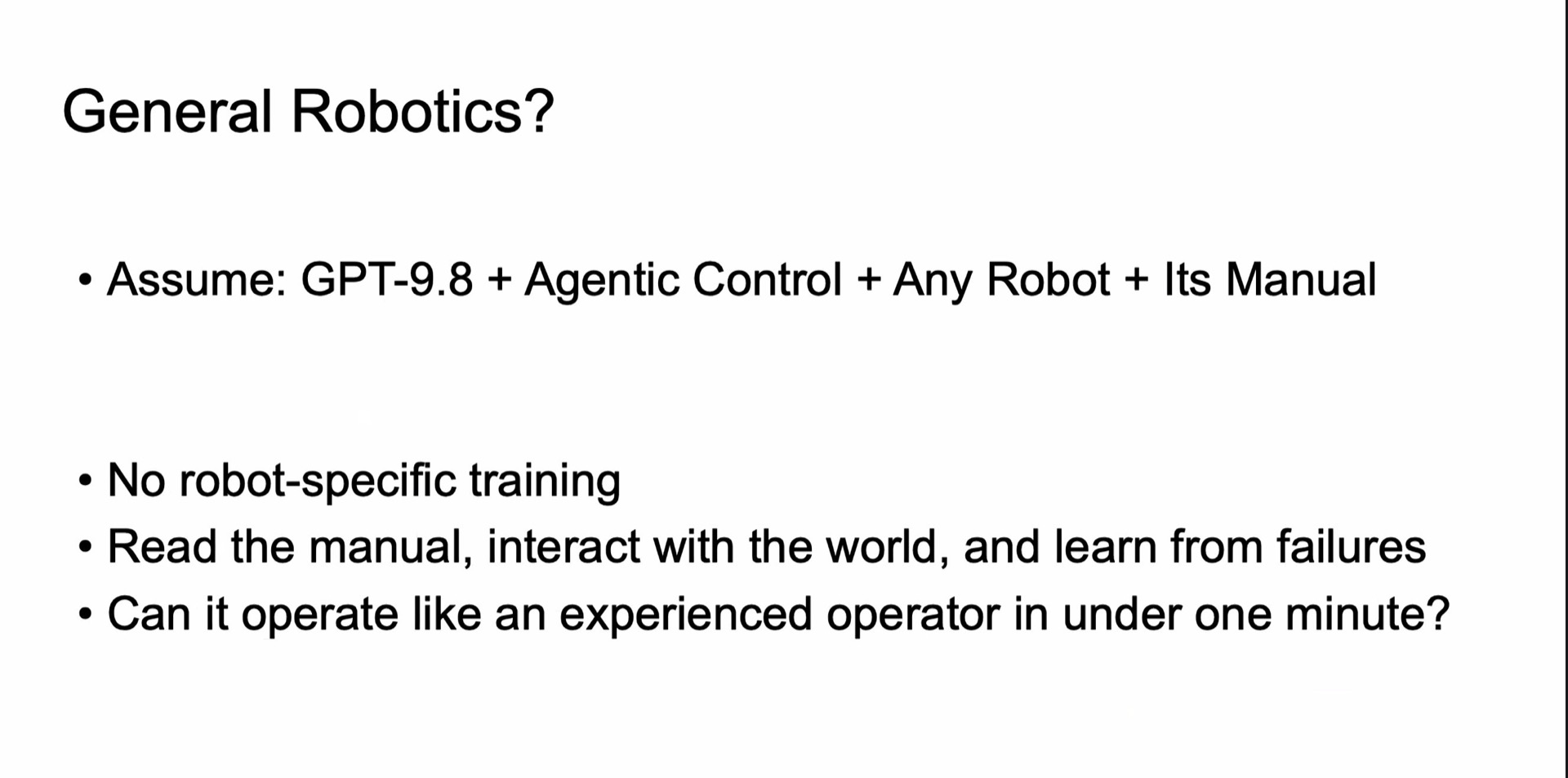
A strong general model.
Agentic, closed-loop control.
Any robot, given its manual. No robot training.
Slide: J. Wang, General Robotics?, IMW/CVPR 2026 (via D. Mishkin) .
J. Wang's slide from CVPR 2026: a strong model, agentic control, any robot and its manual, and no robot-specific training.
02 · General robotics
What limits today's robot models?
handheld grippers
teleoperation
egocentric video
finite action datasets one operator per episode bounded by collection time
π0.5 → π0.7 VLA
GEN-1 video-action
LingBot-VA 2.0
any next architecture
Teleop data. VLAs scale with operator hours.
Images: ALOHA ; UMI ; Ego4D . Models: π0.7 ; GEN-1 ; LingBot-VA 2.0 .
Handheld grippers, teleoperation and egocentric video feed every architecture: flow-matching VLAs like π0.7, video-action models like GEN-1 and LingBot-VA 2.0. Change the embodiment or the camera setup and you collect again. VLAs scale with teleop hours; an agent harness scales with autonomous rollouts.
02 · General robotics
And robots? The robot-use agent (RUA)
We introduce
Robot-use agent: Isola, Robot-Use Agents, 2026 .
Where are robots in the three stages? At the first. The agent that does it has a name, from Phillip Isola: a robot-use agent, RUA: a language model that operates a robot through tools. We introduce ORA, Open Robot-Use Agents: an open RUA harness.
03 · ORA
What is an agent?
language model DeepSeek-V4.1-Flash plans, grounds, decides open-weight model, used as released one tool call reads
harness tools, instructions, memory the harness
Manual prompt bundle
Robot-specific cards and tools bind to compatible controllers.
Context context management
recent turns in fullolder turns decisions and lessonslarge results as filesCompacted in stages when the window fills.
tool callan action move · grasp resultan observation images · receipts
A model with a goal
It acts through tools and replans on the result.
The harness closes the loop.
Agent = model + harness, in closed loop.
Yao et al., ReAct, arXiv:2210.03629 . The harness after Figure 6 of ORA, fastrua.ai, October 2026 .
An agent is a model and a harness in closed loop with an environment. One key press at a time: the model with a goal; a tool call acts on the environment; the result comes back and it replans; the harness is everything around the model that closes that loop. Last key press: ORA. The same loop around a robot: the model is DeepSeek-V4.1-Flash as released; the harness has three parts, the manual, the tools and the context; behind the trust boundary are the robots and the success check, which the model never sees.
03 · ORA
Where does the language model sit?
End-to-end VLA It is the policy.
Planner + learned policy It directs a learned policy.
Code as policy It writes the program.
Robot-use agent It calls tools, in closed loop.
End-to-end VLA RT-2, π0.5, OpenVLA It is the policy. Decision rate every control step Robot data large teleop datasets Planner + learned policy SayCan, Helix, GR00T N1, RPent It directs a learned policy. Decision rate once per skill Robot data demos for the policy Code as policy Code as Policies, CaP-Agent0, ASPIRE It writes the program. Decision rate once or a few times per task Robot data none Robot-use agent Guava, OpenRUA, ORA It calls tools, in closed loop. Decision rate once per call or program Robot data none
Four paradigms, by what the language model does and how often it decides. End-to-end VLA: the model is the visuomotor policy and decides at every control step; that takes large teleop datasets. Planner plus learned policy: it sequences a learned low-level policy. Code as policy: it writes a program up front and the program runs. Robot-use agent, ours: it calls a tool, reads the result and replans. Some systems combine several.
03 · ORA · prompt bundle
What does the model need to know?
Embodiment Frames, axes, offsets.
Environment Cameras, workspace.
Task Verbatim.
Success In plain language.
Tools Schemas.
The model never sees simulator state or the success check's code.
The prompt bundle gives the model its embodiment and its task contract. Five parts, one per key press: embodiment, environment, the benchmark's instruction verbatim, the success criterion in plain language, and the tool schemas. The model never sees the success check's code, object ground truth or simulator contacts.
03 · ORA · prompt bundle · from a run
Embodiment cards, verbatim
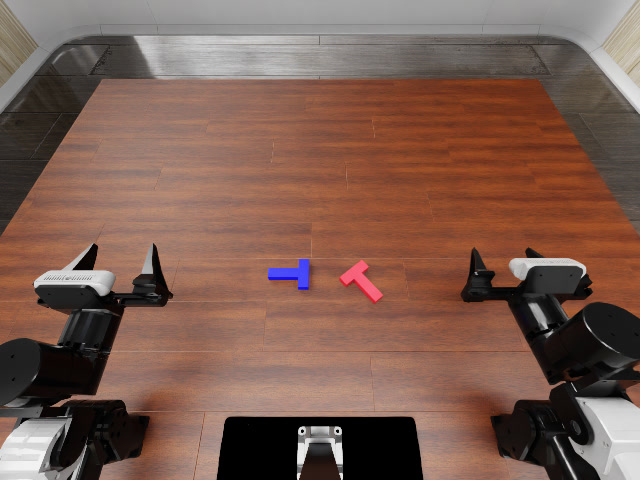
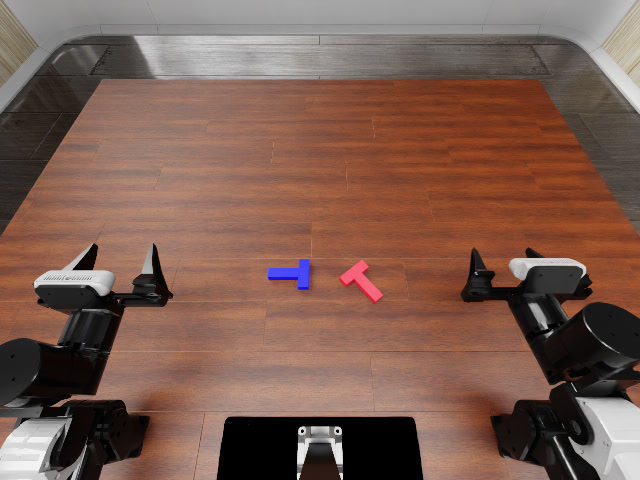
ARX X5RoboDojo Fixed-base ARX X5: left 6-DoF arm, right 6-DoF arm; parallel-jaw grippers. Cameras: head fixed RGB-D; left_wrist, right_wrist moving RGB-D.
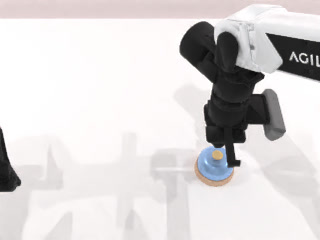
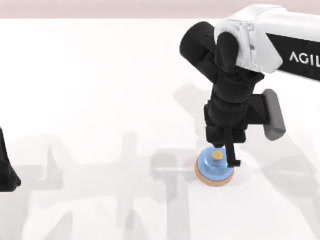
Controlled point wrist flange; add no offset Success signal the benchmark's reward manager ALOHARoboTwin Fixed-base ALOHA-AgileX: left 6-DoF arm, right 6-DoF arm; parallel-jaw grippers. right_tcp is the controlled reference, 0.12 m from the flange; commands already target it.
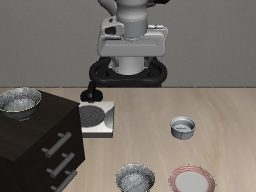
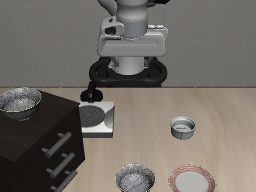
Controlled point tool point 0.12 m beyond the flange Success signal the task's check_success FrankaLIBERO / LIBERO-Pro Fixed-base Franka Panda: right 7-DoF arm; parallel-jaw grippers. right_grip_site is the controlled reference, 0.097 m from the end-effector root; commands already target it.
Controlled point grip site 0.097 m beyond the end-effector root Success signal the environment's termination signal
The opening of each robot card, verbatim, and four of its facts. Figure 7, ORA, fastrua.ai, October 2026 .
The real thing: the opening of the embodiment card for three robots, verbatim, and four facts from each: the controlled point, the gripper's axes, the max jaw opening and the success signal.
03 · ORA · context management
What do we want from the context?
A clear context Small requests.Lossless history What leaves can be read back.Cache hits A rewrite breaks the prefix cache.
They pull apart. Compress more: clearer, but lossier, and the cache breaks.
Every turn adds RGB-D images and the window is finite. We want three things. A clear context: small requests, so the model attends to what matters and never hits the window. Lossless history: whatever leaves the request can be read back verbatim. Cache hits: every rewrite of an earlier message breaks the provider's prefix cache from that point; on a self-hosted model that is throughput and latency. They pull against each other: compress more and the context is clearer, but you lose information and break the cache more often.
03 · ORA · context management
Three ways to compress
fixed prefix exact tail: the latest 6 exchanges
ckpt sum
aging starts window prompt cache
artifact store
A request: a fixed prefix, then exchanges.
Each exchange appends. Nothing is rewritten, so the cache holds.
Reference lossless. Outside the tail, results and images become references. Originals go to the store.
The model can reopen one: artifact_read.
Summarize lossy. A closed episode becomes a model-written summary.
Checkpoint lossy, the last resort. Everything before the tail, in about 1,200 tokens.
Defaults: reference from min(100k tokens, half the window), 6 exchanges at a time; summarize at 15% of the limit; checkpoint at 60%.
Three ways to compress, one request, step by step. It starts as a fixed prefix: the prompt, the tool manual, the task. Each exchange appends the model's text, a tool result and images; nothing before it changes, so the prompt cache holds. First, reference: when the request passes 100k tokens or half the window, outside the exact tail of six exchanges, results and images become references and the originals go to the artifact store. Lossless; the model's own text stays; the cache breaks once per batch. The model can reopen an original with artifact_read. Second, summarize: a closed episode becomes a model-written summary. Lossy. Third, checkpoint, the last resort: everything before the tail in about 1,200 tokens. In the code these are levels L1 to L4, L5 and L6.
03 · ORA · tool suite
What can the model call?
Every result is a measurement or a receipt.
Three kinds of tool, as in the post. Look: find an object by name or by a pixel; SAM 3 masks underneath. Measure: metric 3D from calibrated depth, vector math, grasp candidates from Contact-GraspNet. Act: one motion at a time through the supervisor; the environment solves IK and plans with cuRobo; a measured receipt comes back, or a refusal that says why. Every result is a measurement or a receipt.
03 · ORA · tool suite · from a run
From 2D masks to metric 3D
vision_groundfind an object by name · LIBERO-Provision_ground(camera="agentview", text="ketchup bottle")
Three candidates, each with a mask and a 3D centre from depth.
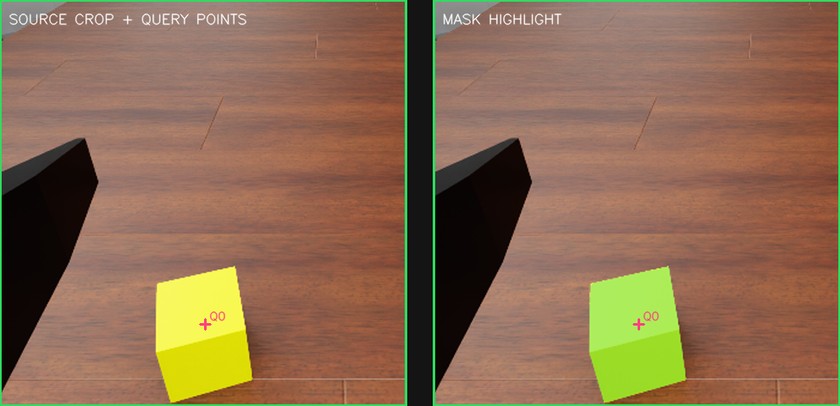
vision_segmentmask what the model points at · RoboDojovision_segment(camera="left_wrist", points_uv=[[215, 412]])
One mask: centre (−0.355, −0.142, 0.800) m, 36 × 37 mm.
Figure 10, ORA, fastrua.ai, October 2026 .
Two real calls. Left: find an object by name; three candidates come back, each with a mask and a centre measured from depth. Right: mask what the model points at; a centre in metres and a size come back.
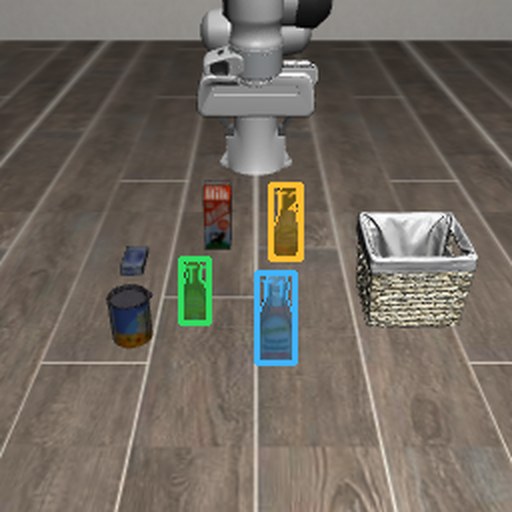
The loop on a real run: ORA's terminal on the left, the robot's cameras on the right. The last two turns of a solved RoboDojo task.
Given code mode and a workspace, the models write their own tools as they go: 34,327 functions in 727 RoboDojo episodes. Each dot is one function.
Six solved tasks, then four benchmarks on one wall.
03 · ORA · results
Does it work zero-shot?
79.6%
RoboTwin C2R235 cases
RoboDojo · by system1.9 DeepSeek leaderboard 5.5 RPent with its VLA 22.5 Astra leaderboard 27.8 Uni-Robot-Agent 39.9 ORA Same model, other agent systems RoboDojo vs Uni-Robot-Agent 27.8 39.9 RoboLab vs Uni-Robot-Agent 62.3 78.3 RoboTwin vs RPent 71.1 79.6 LIBERO-Pro vs RPent* 92.2 87.5
DeepSeek-V4.1-Flash throughout. Successes after the step limit count. Leaderboard: RoboDojo's harness, RGB only. *With a LIBERO-trained policy.
All zero-shot with DeepSeek-V4.1-Flash, open weights. Top: the four benchmarks. Left: RoboDojo by system; the two leaderboard bars are RoboDojo's own harness under another protocol, there for scale. Right: the same model inside other agent systems on the same cases; RPent on LIBERO-Pro runs a LIBERO-trained policy and an explored memory. If asked about the step limit: these count successes after the benchmark's step limit. Within the limit RoboDojo is ORA 10.6% against Uni-Robot-Agent 16.2%; RoboLab is 66.7% against 59.7%.
03 · ORA · results
What does it cost? Which models?
Input tokens per success · millions, vs Uni-Robot-Agent10 M 100 M RoboLab 7.5× fewer 54.4 7.3 RoboDojo 6.7× fewer 211.9 31.5 Open-weight models in ORA · RoboDojo, code modeDeepSeek V4.1-Flash 48.7 Qwen 3.8-Flash-Next 35.9 Muse Spark Open 15.6 Nemotron 3.5-Super-VL 6.3
Tokens: 299 RoboLab and 188 RoboDojo paired cases, failures included. Models: 4 layouts per task for DeepSeek, 2 for the others.
Left: input tokens per success against Uni-Robot-Agent, same model and cases, on a log scale: about seven times fewer. Right: four open models in the same harness.
03 · ORA
Does it run on hardware?
A low-cost arm. Operator-approved. No success rates yet.
Figures 12 and 13, ORA, fastrua.ai, October 2026 . Time sped up; pauses while the model plans are shown as stills.
03 · ORA · distill
Can training make it stronger?
PEAR November 2026
Harness and RL, same model · Qwen3.8-27B, RoboLab-1205.4 as released 37.3 PEAR RL 52.5 as released 61.9 PEAR RL no harness in ORA
Zero-shot in ORA beats RL without a harness. Together: 61.9%.
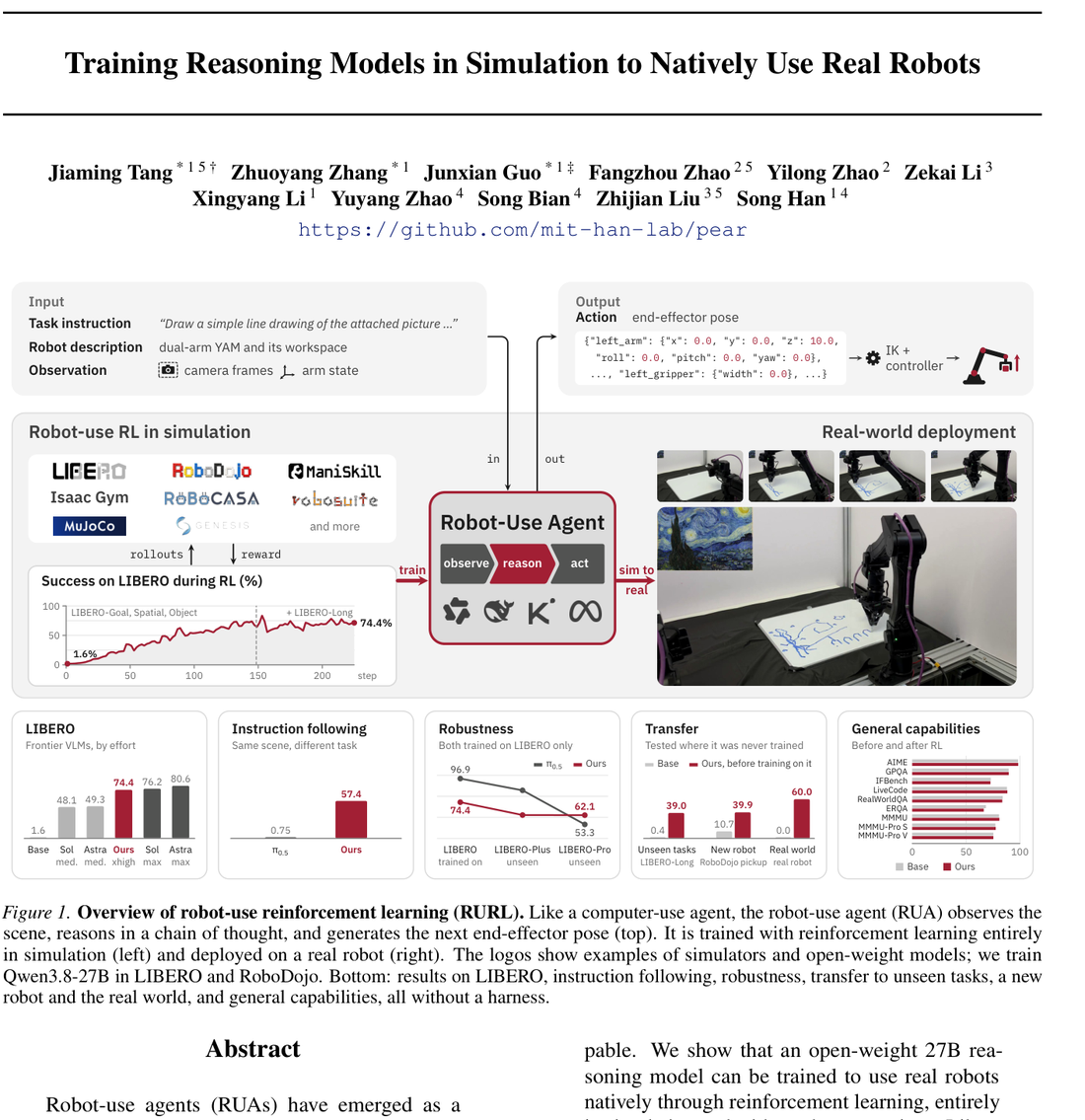
PEAR, arXiv:2611.18562. No harness: PEAR's paper. In ORA: our runs, scored within the step limit, as PEAR does.
How do you make the model itself stronger? PEAR trains a reasoning model with RL in simulation to use robots natively. Same model, Qwen3.8-27B, on RoboLab-120: 5.4% as released without a harness, 37.3% with PEAR's RL without a harness, 52.5% zero-shot inside ORA, 61.9% with PEAR's RL inside ORA. So the harness is a cold start for post-training and a free win on top of it. This is stage two starting.
Where next?
Fast General-purpose Continually learning
Thanks. fastrua.ai
Where we are going, from the lab's home page. Fast: a rally of table tennis. General-purpose: one core in four bodies. Continually learning: a throw that misses, a reflection, a throw that lands. Thanks.
References
Core systems
Policy artifacts and runtimes
Liang et al., Code as Policies, arXiv:2209.07753 Fu et al., CaP-X, arXiv:2603.22435 Elmaaroufi et al., RHO: Your Coding Agent is Secretly a Roboticist, arXiv:2606.16458 Zhang et al., Harness VLA, arXiv:2607.08448 RPent: Agentic Infrastructure for the Physical World, GitHub, 2026 OpenETA: Embodied Task Agent, GitHub, 2026 Pigey: Physical-Agency Orchestrator, 2026 Experience, data, and weights
Playful Agentic Robot Learning (RATs), 2026 NVIDIA GEAR, ASPIRE, 2026 Waddle Labs, Introducing Waddle, 2026 GLM Skills Embodied Data Engine, GitHub, 2026 Liu et al., Guava, arXiv:2606.18363 Berman et al., Claude plays robotics, Anthropic, 2026 CaP-Bench / CaP-Agent0, 2026 PEAR: Training Reasoning Models in Simulation to Natively Use Real Robots, arXiv:2611.18562
References
Language models, domain by domain
Reasoning
Wei et al., Chain-of-Thought Prompting, arXiv:2201.11903 Kojima et al., Large Language Models are Zero-Shot Reasoners, arXiv:2205.11916 Zelikman et al., STaR, arXiv:2203.14465 OpenAI, Learning to reason with LLMs, 2024 DeepSeek-AI, DeepSeek-R1, arXiv:2501.12948 Computer use
Yang et al., Set-of-Mark Prompting, arXiv:2310.11441 Xie et al., OSWorld, arXiv:2404.07972 Hong et al., CogAgent, arXiv:2312.08914 Qin et al., UI-TARS, arXiv:2501.12326 Anthropic, Introducing computer use, 2024 OpenAI, Computer-Using Agent, 2025



 A robot-use agent: the same loop, around a robot
 ARX X5RoboDojo · two arms
 ALOHARoboTwin · two arms
 FrankaLIBERO · one armsuccess checkcode hidden from the model
 ARX X5RoboDojo
 ALOHARoboTwin
 FrankaLIBERO / LIBERO-Pro